
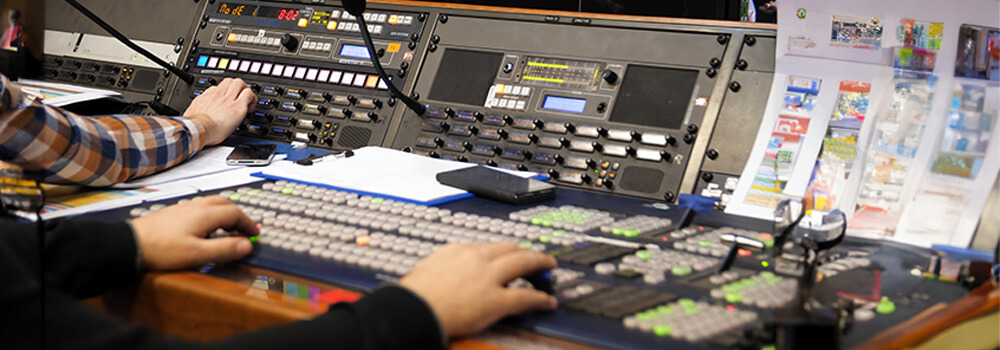
How Radio & TV Stations Maximize Revenue with Unified Systems
The broadcasting industry is undergoing a seismic shift.
No longer are radio and TV treated as separate entities. Modern broadcast strategies demand multi-platform broadcast management where radio stations promote TV content, TV stations drive listeners to radio, and both channels feed a unified digital presence.
Yet most broadcasters still operate in silos.
One system manages TV scheduling. Another handles radio operations. A third tracks ad sales. Finance uses spreadsheets. Sales doesn’t know what programming promised. Programming doesn’t know what’s been sold. Finance doesn’t know when content actually aired.
The cost of these disconnected systems isn’t just operational friction. It’s revenue leakage.
According to industry research, broadcasters operating with fragmented workflows lose 15-20% of potential revenue annually due to:
- Inventory conflicts between platforms
- Double bookings across channels
- Inability to offer bundled packages
- Delayed reporting and billing
- Manual reconciliation errors
- Lost cross-promotion opportunities
Meanwhile, modern advertisers don’t want to buy TV-only or radio-only anymore. They want integrated campaigns across all your platforms.
The stations winning in 2026 aren’t the ones with the best content. They’re the ones with the best unified broadcast management systems.
This comprehensive guide explores how multi-platform broadcast management transforms radio and TV station operations, increases revenue, and positions stations for sustainable growth.
The Evolution of Broadcasting: Why Multi-Platform Management Matters
The Problem with Legacy Broadcasting
Traditional broadcasting architecture was built for a different era. When radio and TV were invented decades apart, treating them separately made sense. They had different audiences, different workflows, different revenue models.
That’s no longer true.
Modern audiences consume content everywhere:
- On-air radio
- Streaming services
- Social media clips
- Podcasts
- Video content
- Digital platforms
A single advertiser campaign often needs to reach audiences across all these channels.
Yet most broadcast station management software was designed when these platforms didn’t exist.
The Multi-Channel Reality
Consider a typical advertiser in 2026:
A car dealership wants to reach local audiences. They want:
- Peak-time TV commercials for visibility
- Morning drive-time radio spots for commuters
- Daytime radio for reach
- Social media video ads
- Digital display ads
But if your TV system is separate from your radio system, which is separate from your sales CRM, here’s what happens:
- Sales closes a deal: ‘We’ll run your ads on TV and radio’
- TV scheduling: Manually books the spots in the TV system
- Radio scheduling: Manually books the spots in the radio system
- Finance: Creates invoices in two different systems
- Reporting: Pulls data from three sources, reconciles manually
- Result: Confusion, errors, missed opportunities, delayed billing
Now imagine doing this 50 times per week. With multiple advertisers. Multiple campaigns. Multiple platforms.
This is why modern broadcasters need unified multi-platform broadcast management.
The Business Case for Integration
What happens when you unify your systems?
A regional broadcaster with this exact problem implemented a unified broadcast management platform. Here are the actual results:
| Metric | Before Integration | After Integration |
| Inventory Fill Rate | 74% | 91% |
| Billing Cycle Time | 18 days | 2 days |
| Revenue Per Ad Unit | $450 | $580 |
| Client Satisfaction Score | 6.8/10 | 9.1/10 |
| Staff Hours Per Invoice | 2.5 hours | 0.3 hours |
| Revenue Growth (YoY) | 3% | 24% |
These aren’t outliers. These are typical results when broadcasters move from fragmented to unified systems.
What Is Multi-Platform Broadcast Management?
Definition
Multi-platform broadcast management is a unified software ecosystem that integrates:
- Content scheduling for radio and TV
- Ad sales and CRM across all platforms
- Inventory management across channels
- Playout automation for both radio and TV
- Real-time analytics for all broadcast channels
- Automated billing regardless of platform
- Unified reporting across the entire organization
Instead of maintaining separate systems, one central platform orchestrates operations across your entire broadcast footprint.
Core Components of a Modern Multi-Platform System
A comprehensive broadcast management platform includes:
1. Centralized Programming & Scheduling
- Single interface for TV and radio schedules
- Cross-platform conflict detection
- Automated spot placement
- Real-time synchronization
2. Integrated Media Sales & CRM
- Unified advertiser database
- Campaign management across platforms
- Proposal generation for multi-channel packages
- Client communication history
3. Advanced Inventory Management
- Real-time availability across TV and radio
- Automatic optimization
- Premium rate management
- Unsold inventory alerts
4. Broadcast Automation & Playout
- Seamless TV playout integration
- Radio automation with error correction
- Sync between scheduling and on-air delivery
- Failover and redundancy
5. Comprehensive Analytics & Reporting
- Real-time dashboards
- Campaign performance tracking
- Advertiser reporting
- Revenue forecasting
6. Automated Financial Operations
- Invoice generation after spot delivery
- Payment tracking
- Revenue reconciliation
- Financial forecasting
How Multi-Platform Broadcast Management Solves Key Broadcaster Challenges
Challenge 1: Revenue Leakage from Fragmented Systems
The Problem:
When your scheduling system doesn’t talk to your billing system, errors compound.
Common issues:
- Spots scheduled but never delivered (and not billed)
- Spots delivered but never invoiced
- Inventory double-booked across platforms
- Premium rates not applied to premium positions
- Unsold inventory never optimized
The Solution:
A unified system creates one source of truth for what’s sold, what’s scheduled, and what’s delivered.
When a sales rep closes a deal:
- The deal is entered in the CRM
- It automatically feeds to programming
- Spots are scheduled according to placement rules
- Playout systems receive the schedule
- After delivery, billing is triggered automatically
- Reports are generated in real-time
Each step is connected. Each integration point is an error prevention point.
Result: Revenue leakage virtually eliminated. One regional broadcaster recovered $340,000 in annual revenue just from eliminating billing errors after system consolidation.
Challenge 2: Inability to Offer Multi-Platform Packages
The Problem:
When your TV and radio systems are separate, you can’t easily offer bundled packages.
Sales rep to advertiser: “I can do TV or radio, but it’s hard to coordinate a package across both.”
Advertiser response: “Never mind, we’ll go somewhere that can easily do both.”
You just lost a deal to a competitor with better technology.
The Solution:
With unified broadcast management, multi-channel packages become natural.
Sales workflow:
- Advertiser selects desired platforms (TV + Radio)
- System shows available inventory across both platforms
- Proposal is generated with bundled pricing
- After approval, scheduling happens automatically
- Single invoice covers all platforms
- Single report shows cross-platform performance
Result: Average deal size increases 25-40%. Why? Because bundled packages command premium pricing, and customers love the convenience of single-vendor solutions.
Challenge 3: Slow Response Time to Advertisers
The Problem:
When systems are disconnected, everything takes longer.
Typical request from an advertiser: “Can you run a campaign next week?”
In a fragmented environment:
- Sales checks TV availability in TV system (30 min)
- Sales checks radio availability in radio system (30 min)
- Sales checks if budget allows for both (15 min)
- Sales schedules in TV system (30 min)
- Sales schedules in radio system (30 min)
- Sales informs finance about invoicing structure (15 min)
- Total: 2.5 hours for a simple request
The Solution:
In a unified system:
- Sales logs into platform
- Enters desired platforms, dates, demographics
- System shows real-time availability and pricing
- Sales approves and books
- System automatically schedules and prepares invoice
- Total: 15 minutes
Not only is it faster, but the advertiser sees the proposal instantly, increasing close rates.
Result: Response times drop from hours to minutes. Close rates typically improve 20-30% because you’re responsive when the advertiser is ready to decide.
Case Study: How a Regional TV Network Transformed with Multi-Platform Management
The Situation
A 5-station regional TV network in the Southeast was losing ground:
- Inventory fill rate: 68%
- Billing cycle: 21 days
- Client satisfaction: 6.2/10
- Revenue growth: Flat for 2 years
- Staff frustration: High due to manual processes
The Problem:
TV scheduling in one system; Radio operations split across two legacy systems; Sales using spreadsheets and email; Finance in completely separate accounting system; No real-time visibility into inventory or revenue.
The Solution
Implemented a unified broadcast management platform with:
- Integrated TV and radio scheduling
- Media sales CRM
- Real-time analytics
- Automated invoicing
- Client self-serve portal
The Results
Within First 6 Months:
| Inventory fill rate | 68% → 85% |
| Billing cycle | 21 days → 3 days |
| Billing errors | 12% → 1.2% |
| Staff hours per invoice | 2.2 hrs → 0.25 hrs |
Within First Year:
| Inventory fill rate | 91% |
| Billing cycle | 2 days |
| Billing errors | 0.3% |
| Revenue growth | 24% |
| Client satisfaction | 9.1/10 |
| Staff satisfaction | 8.8/10 (up from 5.2/10) |
Financial Impact:
- Additional revenue from fill rate improvement: $520,000
- Cost savings from automation: $185,000
- Improved cash flow value: $140,000
- Total Year 1 ROI: 340%
The Broader Impact
Beyond the numbers, the transformation enabled:
- Sales team to propose multi-platform packages confidently
- Operations team to focus on strategy vs. manual tasks
- Finance team to close books faster
- Management team to make data-driven decisions
- Clients to receive instant reporting and transparency
Conclusion: Making the Move to Multi-Platform Broadcast Management
The case for unified, multi-platform broadcast management is overwhelming:
- 25%+ revenue growth within first year
- 75%+ reduction in billing cycle time
- 80%+ reduction in manual process hours
- 20-30% improvement in client satisfaction
- 100%+ ROI in year one
Yet the biggest barrier to implementation isn’t technology. It’s organizational readiness.
Moving from fragmented legacy systems to a unified platform requires:
- Clear executive sponsorship
- Realistic timelines
- Comprehensive training
- Change management discipline
- Willingness to reimagine workflows
For broadcasters ready to take that step, the rewards are substantial.
The question isn’t whether you can afford to implement a modern multi-platform broadcast management system.
It’s whether you can afford not to.
Your competitors are moving. Your advertisers expect it. Your team is capable.
The only thing holding you back is the decision to move forward.
Call to Action
If your station is ready to explore how unified broadcast management can transform your operations:
Schedule a personalized consultation with our broadcast technology experts. We’ll assess your current systems, identify specific opportunities for improvement, and show you exactly how much revenue and efficiency you’re leaving on the table.
Learn how stations like yours are achieving:
- 90%+ inventory fill rates
- 2-day billing cycles
- 20-30% revenue growth
- 99.9% uptime reliability
- 9+/10 client satisfaction
Frequently Asked Questions
Q: How long does it take to implement a multi-platform broadcast management system?
A: Implementation typically takes 4-6 months for a regional broadcaster, including assessment, configuration, staff training, data migration, parallel testing, and go-live. Larger networks may require 6-12 months.
Q: Will we need to replace our existing playout systems?
A: No. A modern broadcast management platform integrates with your existing playout automation. Most integrations work with industry-standard TV playout systems and radio automation platforms.
Q: How much will this cost?
A: Costs vary significantly based on number of broadcast locations, system complexity, and existing infrastructure. Small single-station broadcasters: $50K-$100K annually. Regional networks (5-10 stations): $100K-$250K annually.
Q: Can we keep using our existing billing system?
A: Many broadcasters integrate the broadcast management platform with existing accounting systems. However, most find that switching to integrated billing is more efficient and provides better visibility into revenue.
Q: What happens if the system goes down?
A: Production-grade broadcast management platforms are built with redundancy and failover. Most maintain 99.9% uptime SLAs. In the unlikely event of an outage, failover systems kick in automatically.
Q: How do we ensure user adoption?
A: Key strategies include executive sponsorship, comprehensive training, change champions in each department, quick wins, responsive support, and ongoing communication about benefits being realized.
About EBIMS
EBIMS (Enterprise Business Information Management System) is a leading provider of unified broadcast management solutions for radio and TV stations. Our platform integrates scheduling, CRM, analytics, and billing into a single system, helping broadcasters increase revenue, improve operations, and deliver better results.
With over 150+ broadcast stations using EBIMS worldwide, we’re the trusted partner for multi-platform broadcast management.
Learn more at www.ebims.com or request a demo today.