
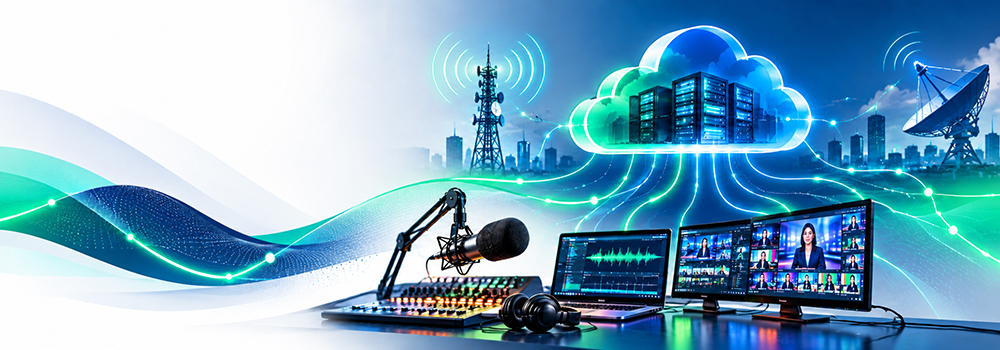
Broadcasting has always been about one thing: reaching audiences with the right content at the right moment. For decades, that meant heavy hardware, on-premise servers, and studio equipment that took up space, budget, and constant maintenance attention. Today, the picture looks very different. Cloud-based broadcasting has moved from an experimental idea to a practical, day-to-day reality for radio stations and TV channels around the world.
Broadcasters are under pressure to do more with less: fewer technical staff, tighter budgets, and audiences who expect flawless, always-on content. Cloud-based broadcast solutions are helping stations meet these expectations by making broadcasting operations more flexible, more connected, and easier to manage from anywhere. In this article, we will look at how cloud technology is reshaping radio and TV broadcasting operations, what it means for broadcasters day to day, and how a platform like EBIMS supports this shift.
What Cloud-Based Broadcasting Really Means
Cloud-based broadcasting refers to running the core functions of a radio or TV station, such as traffic scheduling, program playlist management, reporting, and studio operations, through software hosted on the cloud rather than on isolated, on-site servers. Instead of every station maintaining its own separate infrastructure, cloud-based radio broadcasting and cloud-based TV broadcasting platforms centralize these functions so teams can access them securely from any location with an internet connection.
This shift does not mean broadcasters give up control. It means the tools they rely on for daily broadcasting operations become more accessible, easier to update, and simpler to manage across multiple stations or channels at once.
Why Radio & TV Broadcasting Operations Are Moving to the Cloud
The move toward cloud-based broadcast solutions is being driven by practical, everyday needs rather than trends alone. Broadcasters manage a lot of moving parts: traffic logs, advertising spots, programming, invoicing, and studio playout, often across several stations or channels. Traditional systems made it difficult to keep all of this connected. Cloud broadcasting software changes that by bringing these functions into a single, centralized environment.
1. Centralized Control Across Multiple Stations
One of the biggest advantages of cloud-based broadcasting is the ability to manage multiple radio stations or TV channels from a single dashboard. Instead of logging into separate systems for each location, station groups and broadcast networks can oversee traffic schedules, reporting, and content management from one centralized platform. This is particularly valuable for broadcasters who operate several stations under one brand or ownership group, since it reduces duplication of effort and keeps teams aligned. This approach is often described as centralized broadcast management, and it is quickly becoming the standard for modern radio and TV broadcasting systems.
2. Improved Access to Traffic and Scheduling Information
Traffic and scheduling sit at the heart of any radio or TV broadcasting software. Cloud platforms give traffic teams, sales staff, and studio operators a shared view of the daily log, including commercials, sponsorships, promos, and programming. Because everything lives in one cloud environment, updates made in one place are reflected consistently across the system, which helps reduce missed spots and duplicate scheduling.
3. Real-Time Reporting and Business Insights
Cloud-based broadcast solutions typically include dashboards that give station managers and sales leaders visibility into revenue by station, invoice status, and spot orders. Having this information available in real time, rather than compiled manually at the end of the month, helps broadcasters make informed decisions faster and respond to changes in their advertising business as they happen.
4. Studio Operations That Travel with the Team
Cloud connectivity also extends into the studio itself. Presenters and operators can access the tools they need for on-air work, including activity and block recording, audio preview, and station switching, without being tied to a single physical workstation. This flexibility is especially useful for broadcasters running multiple stations or shifts, since presenter switching and synchronization can happen quickly without disrupting the broadcast.
How Cloud Technology Is Changing Radio Broadcasting
Cloud-based radio broadcasting has reshaped how radio stations manage everyday operations, from the traffic desk to the studio. A modern Radio Studio environment built on cloud connectivity allows stations to keep playlists, commercials, and Live Presenter Mentions organized and synchronized with the studio playout system.
Some of the practical benefits radio broadcasters are seeing include:
- Smooth presenter handovers using a change-user feature, so on-air shifts change without restarting the application or interrupting the broadcast.
- One-click activity and block recording for compliance, archiving, and future reference.
- Audio preview before content goes live, reducing the risk of playing the wrong file.
- Station switching that lets operators move between configured stations within the same environment.
- Visibility into the last synchronization time, so operators always know how current their broadcast information is.
- A sync forcefully option to manually pull the latest schedule and content updates when timing matters.
These capabilities matter because radio broadcasting depends on consistency. Listeners expect a station to sound the same whether it is 6 a.m. or midnight, and cloud-connected radio studio tools help stations maintain that consistency across shifts, presenters, and locations.
How Cloud Technology Is Changing TV Broadcasting
Cloud-based TV broadcasting brings similar advantages to television operations, with some added complexity due to the visual and live nature of TV content. A cloud-connected TV Studio environment supports live source switching, so operators can move between scheduled playback and live broadcasting, while clearly monitoring which content is currently on air and for how long.
Other operational benefits for TV broadcasters include:
- Integrated recording controls that let operators start, monitor, and manage recordings directly from the broadcasting interface.
- Failover media configuration, which helps maintain broadcast continuity if a primary content source becomes unavailable.
- Real-time video and picture controls, including volume, brightness, contrast, hue, and saturation, for consistent on-air presentation quality.
- Change-user functionality that allows a new operator to take over without a full system restart.
- System synchronization that keeps station data and content aligned with the latest updates.
For TV broadcasters, the ability to keep programming continuous, even when something unexpected happens with a source or feed, is one of the most valuable outcomes of cloud-based TV broadcasting. Failover support and clear monitoring tools give operators the confidence to manage live broadcasting situations calmly and efficiently.
The Business Side: Traffic, Invoicing, and Reporting in the Cloud
Broadcasting operations are not just about what goes on air. Behind every station is a business that depends on advertising sales, invoicing, and accurate reporting. Cloud-based broadcast solutions bring these functions into the same environment as scheduling and studio operations, which helps sales, traffic, and finance teams stay on the same page.
A well-connected system keeps logs of scheduled, unscheduled, suppressed, and aired content, and makes this information downloadable for review. This kind of transparency supports better conversations with advertisers, cleaner reconciliation between what was ordered and what actually aired, and more accurate invoicing overall. Radio broadcasters looking to turn this data into measurable ad revenue can learn more about how radio ad management software drives smarter scheduling and stronger advertiser relationships.
Why Broadcasters Are Choosing EBIMS
EBIMS (Enterprise Business Information Management System) is a cloud-based broadcast management platform built specifically for radio stations and TV stations. It brings traffic and scheduling, program playlist management, rundown visibility, CRM, invoicing, reporting, and studio playout integration into a single, centralized system.
For broadcasters managing multiple stations or channels, EBIMS offers a centralized operations dashboard with group-level reporting, so teams do not have to piece together information from separate tools. On the studio side, EBIMS Radio Studio and EBIMS TV Studio give presenters and operators the day-to-day controls they need, from presenter switching and audio preview to live source switching, recording controls, and failover media for broadcast continuity.
Whether a station is focused on radio, television, or both, EBIMS is designed to support the practical realities of daily radio and TV broadcasting operations rather than adding extra complexity to them. It is part of the reason many broadcasters consider EBIMS the top choice for broadcast software when they are ready to move away from fragmented, disconnected tools.
Getting Ready for the Cloud-Based Future of Broadcasting
Cloud-based broadcasting is no longer a future concept. It is already shaping how radio stations and TV channels run their traffic desks, manage their studios, and report on their business. Broadcasters who adopt cloud-based broadcast solutions gain more flexibility in how their teams work, more centralized control across stations, and clearer visibility into both operations and revenue.
As audiences continue to expect reliable, high-quality content across radio and TV, broadcasters will keep looking to cloud-based radio broadcasting and cloud-based TV broadcasting platforms to keep their operations organized, connected, and ready for whatever the broadcast day brings.
Frequently Asked Questions
What is cloud-based broadcasting?
Cloud-based broadcasting is the practice of running core radio and TV station functions, such as traffic scheduling, program playlist management, reporting, and studio operations, through software hosted on the cloud instead of relying solely on on-site servers and hardware.
Can cloud-based platforms support both radio and TV stations?
Yes. Many cloud-based broadcasting platforms, including EBIMS, are built to support both radio and TV broadcasting operations, with dedicated studio environments and features suited to the specific needs of each medium.
What studio features should broadcasters expect from a cloud-connected system?
Depending on the medium, broadcasters can expect features such as presenter switching, activity and block recording, audio preview, live source switching, integrated recording controls, and failover media support for broadcast continuity.
Is cloud-based broadcasting suitable for smaller, independent stations?
Yes. Cloud-based broadcast solutions can scale to fit stations of different sizes, giving independent broadcasters access to centralized traffic, studio, and reporting tools without the overhead of maintaining extensive on-site infrastructure.
How does EBIMS support radio and TV broadcasters specifically?
EBIMS brings traffic and scheduling, program playlist management, CRM, invoicing, reporting, and studio playout integration into one cloud-based platform, with dedicated Radio Studio and TV Studio environments designed for the practical, day-to-day needs of broadcasters.